What we know is what we don't know

The most essential feature of immigration court is its unpredictability.
We have been court watching since June and what we know is that we don’t know. The world we knew was shattered and we don’t know what’s coming next.
Eyes on Immigration Court will be on hiatus for the next three weeks, until next year.
What we do know: ICE hot spots in New York City are expanding. So too will we.
And this week: some fragments from the past six months.
NYS Rep. Micah Lasher
That may be the last, best shot that people have at keeping their families and their lives intact.
In addition to the deeply troubling fact that a building in Manhattan has become part of Trump’s deportation assembly line, disturbing aspects of what we saw at 26 Federal Plaza bear mention. Chief among them is that the people running the place are prohibiting observers from giving any printed information to people awaiting hearings, namely one-page “know your rights” documents that may be the last, best shot that people have at keeping their families and their lives intact. Ironically, this ban is enforced under the cover of rules against “solicitation” -- which are aimed at protecting people from being taken advantage of.
—
E.N.
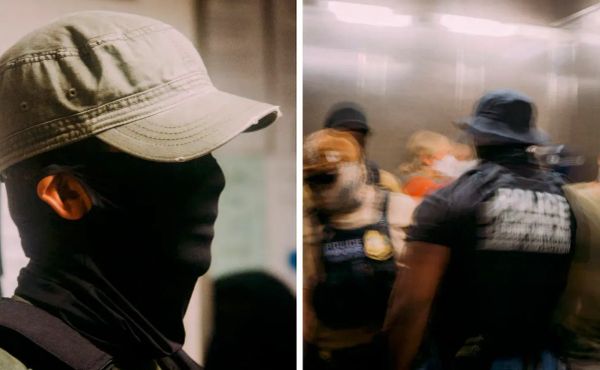
ICE lolled or stood in a clump at the intersection where the corridor from the waiting room branched off: straight to a turn that led to the elevators or left to a hallway that led to another courtroom. One of them had a clipboard with a list of names on it. Sometimes they would greet us sardonically, but mostly we didn’t talk to each other. Signs and repeated warnings made it clear that it was illegal to take their picture, though one of us thought they saw one of them surreptitiously photographing us.
Soon after we got there, a couple of Homeland Security police showed up and stationed themselves in the hallway. But when a court watcher went up to one of the Homeland Security officers to argue that they should not be snatching up the neighbors, he told her that he had nothing to do with who was being taken and no control over it.
“We’re just here to protect, frankly, you, and them,” he said, gesturing to the ICE officers. “We’re here to make sure there’s no trouble in the hallway.”
I wouldn’t be surprised if they’re creating a false record, so they can later claim they were under attack when they most certainly were not.
K.P.
I can’t shake the memory of a court friend I spoke to last week: he was quite simply terrified, waiting to enter court with out a lawyer, knowing no English, having no sense of what would happen next. The cruelty of the process had him frozen in his chair, staring forward.
He was from Ecuador and was seeking asylum. He had arranged for a lawyer to help, but that person never showed. He was accompanied by a friend, but neither man knew what to do or what to expect. He was immobilized by fear, staring straight ahead as we tried to explain how he might seek help. It’s hard to convey how helpless, vulnerable, and hopeless this man seemed. I don’t know what became of his case.

S.S.
The most essential feature of immigration court is its unpredictability.
Daily life in court does not neatly correspond to larger trends. The numbers show a drop in abductions through the summer of 2025. But the statistics do not get at the fact that on one day in mid-August, there were no ICE agents and no abductions, while, on another day a week later, there were an uncountable number of ICE agents, and one abduction.
That day, we court watchers were not the only surprised ones.
On that day, when we court watchers kept coming across more ICE agents in the labyrinth of hallways and stairwells, there were also many Hispanic men, each there alone. All of us court watchers feared how each man’s day would end. They must have been fearful, too, because they listened to our careful explanations of what to do should they be abducted. Our attempt to change the subject by chatting about soccer pretty much failed.
On that day, every single man made it safely out of immigration court.
P.A.
Nothing made sense.
The courts on Tuesday, December 2nd were wild. The (kind, clement) immigration judge who heard juvenile cases was fired two weeks ago; yesterday, seven more immigration judges were fired. Among them was the assistant head of the immigration judges for Manhattan. At 8:30 Tuesday morning, the court administrators had not yet figured out what to do with all the asylum appellants who were due for hearings.
The asylum seekers who had hearings remotely were told they’d be notified by mail of a rescheduled hearing date. But some had come in person, too. I talked to a few who had appointments for hearings with one of the fired judges, while they waited to find out what was going to happen to them.
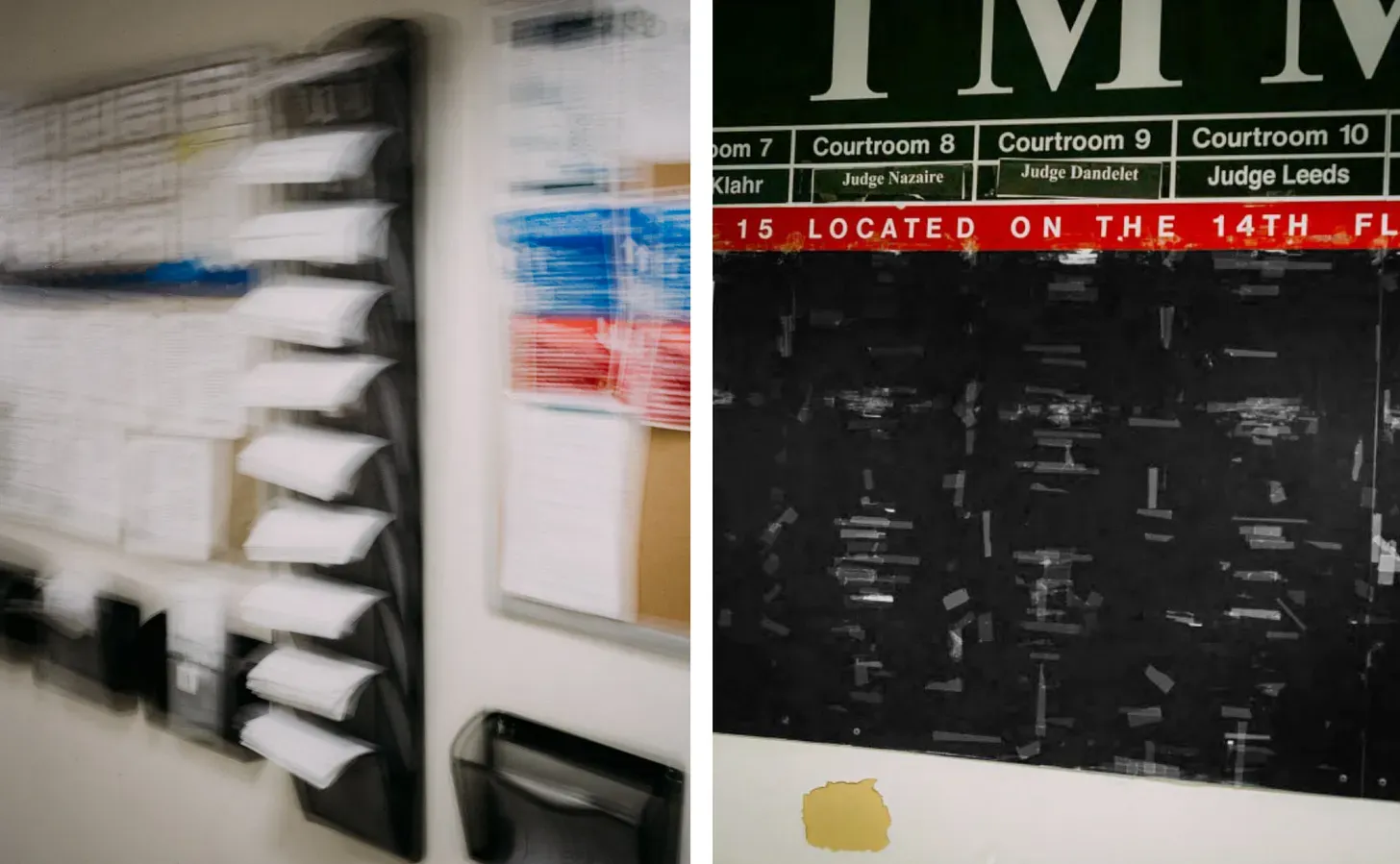
At about 8:45am a court clerk came and posted a docket outside the courtroom door, as if it were a normal day. I asked him what the asylum seekers should do. He said they’d be informed when they arrived. I gestured to the ones who were already waiting and said, “they’re here.” He walked away.
A little later, the court administrator came to the waiting room, called the asylum seekers into the court room, and told them they’d be issued a new court date. She left.
A while after that, one of the notorious ICE squad leaders showed up. She stood right outside the courtroom door, inside the waiting area. In her hand was the telltale sheaf of paper: she was looking for someone.
By that time, more court observers had come, nearly filling the waiting room. We talked about the ICE agent. She glared at us.
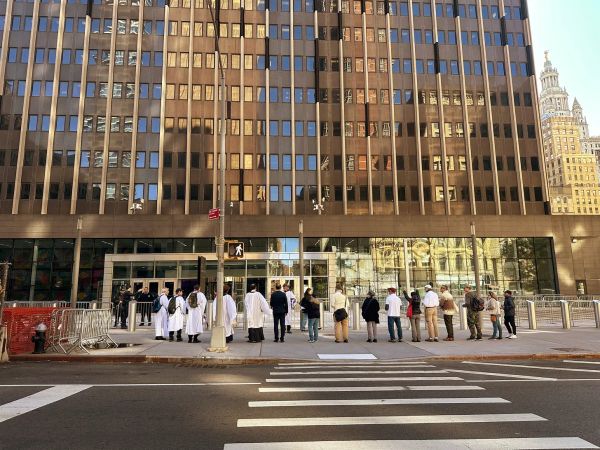
In the corridor right outside the waiting room, eleven ICE men lingered. That drew photojournalists, hoping they’d be able to photograph an abduction.
After a half-hour or so, a judge from a different courtroom came into this courtroom. She heard one case by Webex, and one of a woman who was in the courtroom. That woman left, and was not taken by the ICE agents.
We observers waited, wondering if ICE was after either the Spanish-speaking man who was there with his daughter, or the Haitian guy who was there alone – the only two asylum seekers in the courtroom.Padre Fabián, a reassuring pastoral presence, entered the courtroom and sat with them.
The judge left, saying she had to go back to her regular courtroom to hear cases there.
We court observers worried.
After a long while, the judge returned. There was no Spanish interpreter, so she asked Fabián to translate. She told the Spanish-speaking man with the daughter that they’d receive a notice for a rescheduled hearing by mail. They left, accompanied by court watchers. ICE was not interested in them.
A second Haitian man arrived and entered the courtroom. Would ICE abduct one or both of the Haitians?
The judge then said the same thing to each of them. They could leave, they’d receive notice of a new hearing. Each walked out. Neither was accosted by ICE. All of the court observers took the elevators down with them.
Nothing made sense. The judge dividing her time between court rooms. The administrators not knowing what to do with the asylum seekers. The court clerk not knowing who the ICE squad leader is. The presence of a large ICE squad with nobody to kidnap. The firing of almost a quarter of NYC immigration judges, just when the case load is highest.
But this is the aim of the Regime. It isn’t the “rule of law” they’re tearing down; it’s the world. It’s a world in which the defining features of the spaces we inhabit are constant, where down is down and up is up and when the authorities say they are after you they are after you. The world where promises are kept.
—