Eyes on ICE Raids in Illinois
We were all trapped in helplessness. But we were there with one another.
Guest Post by Lee Goodman
1.
Tears flowed down the girl’s face as we stood talking outside the ICE facility in Broadview, Illinois. She didn’t say anything to me. Her older sister, who was also tearful but more composed, did the talking.
They had come to see their father. He had been arrested by ICE at his workplace two days ago. They knew he was brought there when he was arrested, because he was allowed to make a phone call. They weren’t able to find out if he is still there.
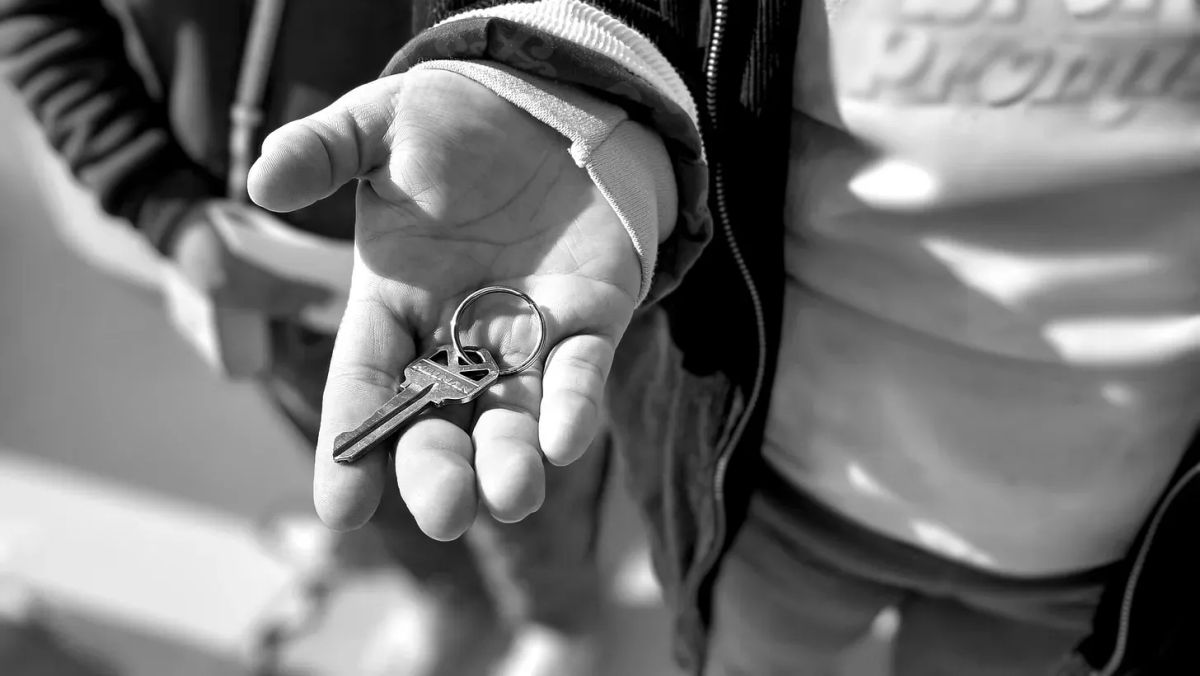
ICE didn’t allow them into the facility. But an Illinois State Police officer who sat in his car outside the facility put through a call for them to ICE. Although the police officer wasn’t able to find out for them where their father was now, he did get ICE to send out the key to their father’s house, and he gave it to them.
The sisters don’t live with their father. He is separated from their mother. He has been in the U.S. for fifteen years. He told them he expects to be deported back to Mexico, but the older sister said he didn’t really have much of an idea what would happen. He doesn’t have a lawyer. They are afraid he may sign papers without knowing what he is signing.
The sisters were grateful to have the key, because it would allow them to go into their father’s house and take care of his cat and bird. As we talked, I asked what kind of bird it was. They didn’t know, except they said it was very colorful and small.
ICE is letting the animals remain in the US. But their father has to go.
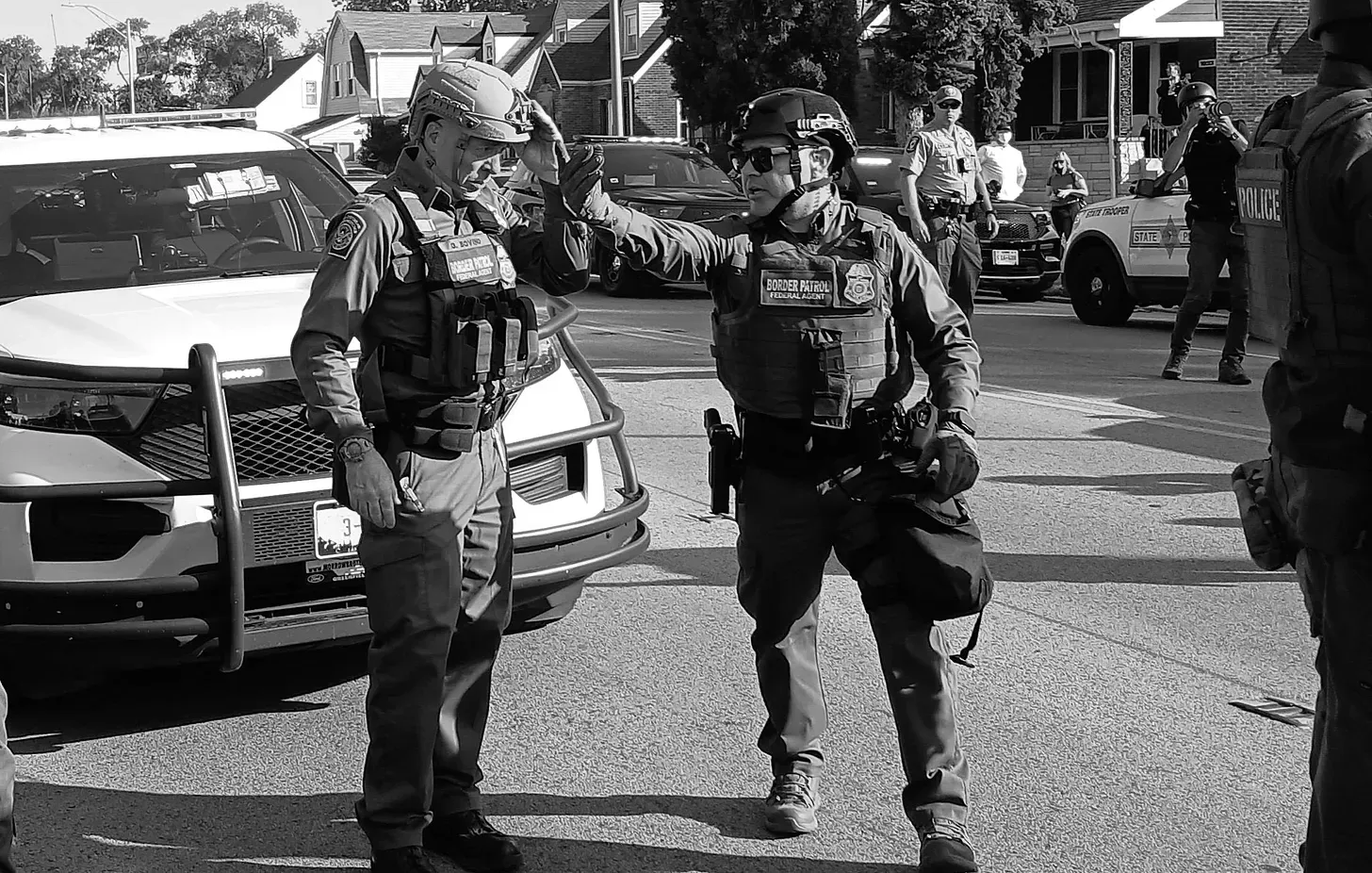
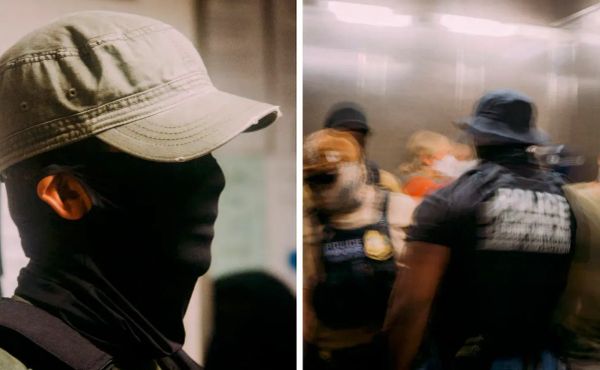
Just down the block, Gregory Bovino, who is in charge of the Chicago-area roundup of migrants, was posing for a video camera crew. He strutted around in front of the ICE facility, then went back to his starting mark and did it again so the camera could get a good shot of him looking virile and heroic, as if he was charging into battle. But there was nothing happening on the street except for the photo-shoot. There were no migrants around, and no pedestrians or vehicle traffic, because the street is blocked off by the state police. The only people there were the Border Patrol agents flanking Bovino. It was just play-acting as if they were on a back-lot movie set. The footage will probably be incorporated into some propaganda reel. Maybe it will be sent to TV stations to use in their reporting. When the video crew had the footage they wanted, Bovino went back inside.
As the sisters with the key said good-bye, the older one thanked the protesters for being there and showing support. They were losing their father, and yet they thanked us. Because that is the kind of people they had been raised to be. Children who would take care of their father, and who would, in a dark and frightening moment, thank strangers who were doing nothing more than being there. There wasn’t much else we could do. There wasn’t much more that they could do either. We were all trapped in helplessness. But we were there with one another.
Bovino did not come over to the sisters. He did not see their tears.
2.
A man in a red MAGA hat showed up outside the Broadview ICE detention center. I greeted him with “Good morning.” He replied, “Good morning,” and went on to say, “I know we probably don’t agree on things.” I said to him, “We can probably agree that we shouldn’t be putting people in concentration camps.” As he opened his mouth to reply, I could tell from the look on his face that he was about to argue with me. I expected him to tell me that the detention centers are not concentration camps. Or that the people we are locking up are not legally in this country, so what we are doing to them is OK. These are the standard arguments I hear from Trump supporters. But the man paused and then said, “Yes, we can agree on that.” That was enough for me. I wished him a good day and walked away. I didn’t want to take the conversation any further. I wanted him to have that basic point of agreement in his head for as long as possible.
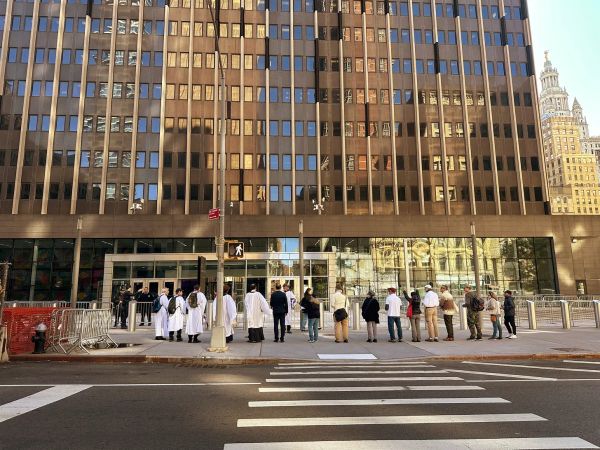
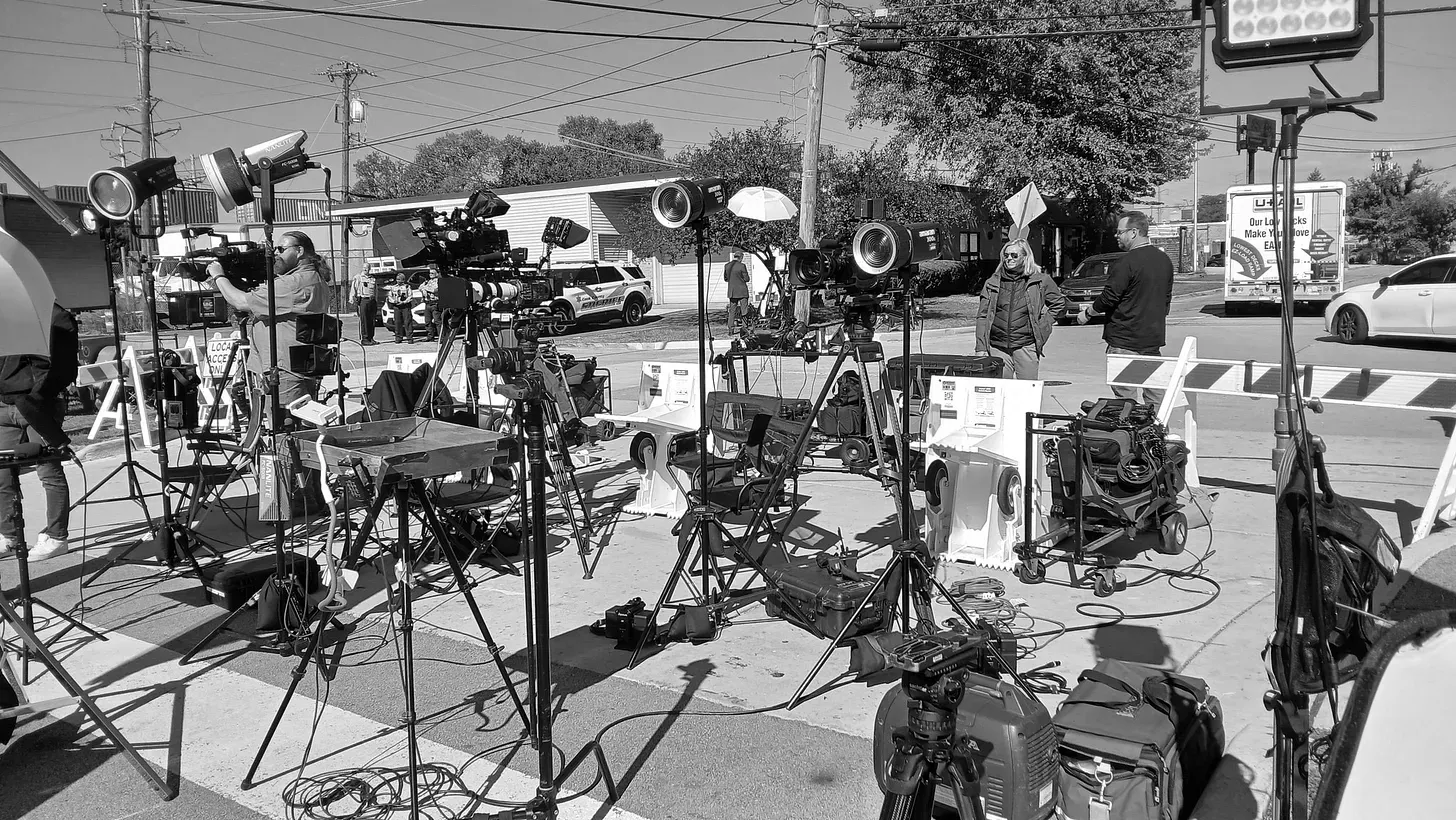
That was yesterday. Today I was at Broadview along with local, national, and international TV and print news crews. I talked with reporters from the Netherlands, France, Canada, Japan, and Switzerland. We were all waiting for a judge to decide whether the federal government could order the Texas and Illinois National Guards to support ICE as they round up migrants in Illinois against the wishes of Illinois’ governor. The judge said no and issued a temporary restraining order.
We also won another court case today. ICE has been shooting tear gas and pepper spray at protesters. They have also been shooting at reporters. Deliberately. Some of the reporters sued, and today a judge said ICE has to stop gassing the press and peaceful protesters. You would think that ICE would know that without a judge having to tell them. Now they know. I’m going to keep carrying a gas mask anyway.
Both cases may be appealed. If they are, there is no telling whether the judges’ rulings will be upheld or struck down. But for now, we have two important victories, and I am happy to celebrate them.
The protests have been going on for weeks now, and the regulars have gotten to know each other a bit. We got a tip this morning to expect that some Trump-aligned agitators will show up tomorrow to disrupt the normally peaceful gathering. I have no way of knowing whether the information is reliable, but we’ll keep our eyes open. It has happened before at other places.
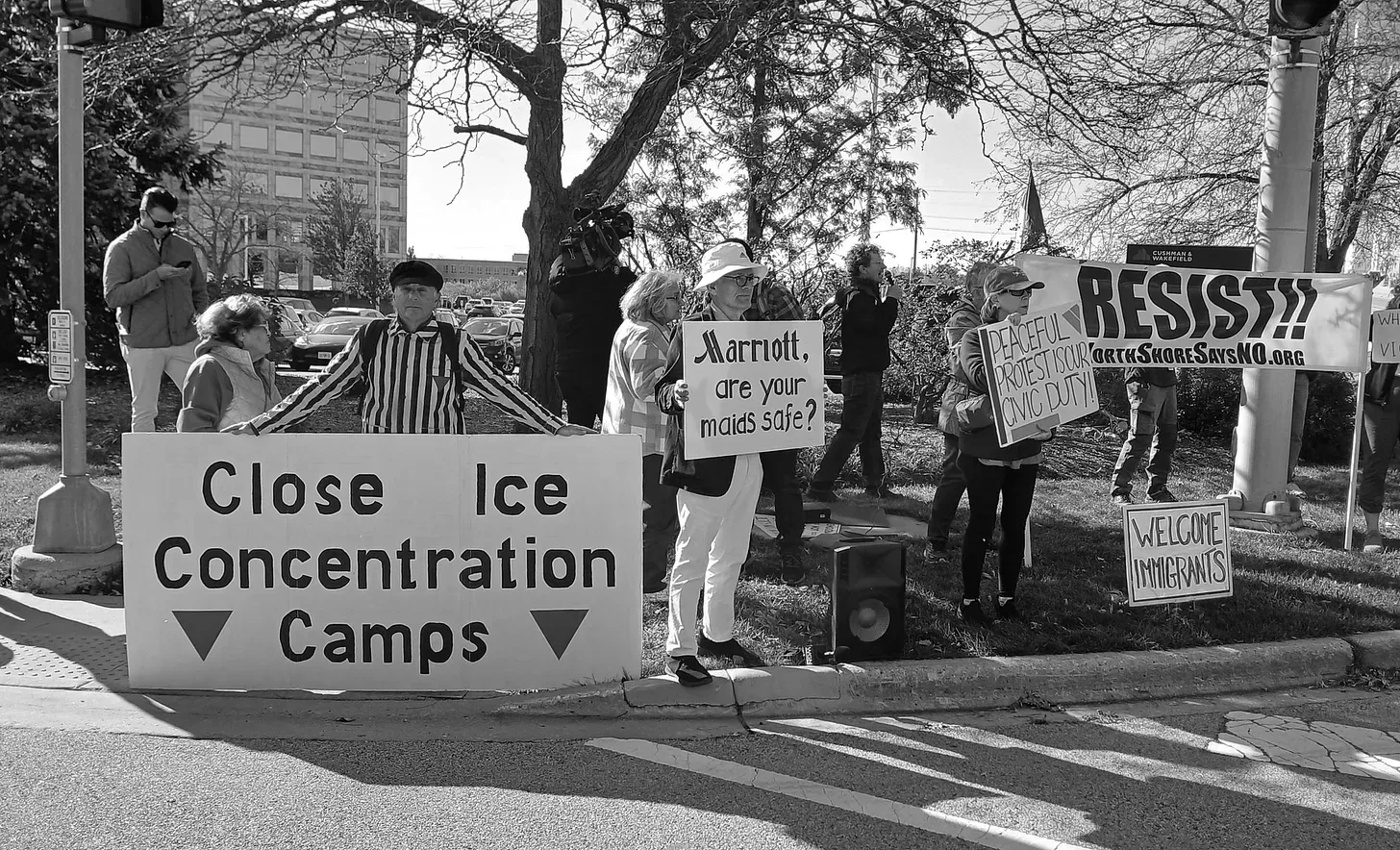
A man brought his teenage daughter to the protest today. He is home-schooling her, and we were her lesson for the day. I answered some of her questions and told her where she can get more information.
I ate my bag lunch at the medical tent that volunteers put up around the corner from the protest site. While I was there, a woman pulled her car up and unloaded food and supplies from the trunk. She said she had bought them with money people have been sending her to support the protest effort.
The mayor of Broadview declared that protests could only take place between 9:00 am and 6:00 pm. She is trying to keep the protests from disturbing area residents. This morning, one of the protesters showed me a ticket the police had given him for disorderly conduct when he refused to leave last evening. He didn’t seem like a disorderly sort. We agreed that the mayor’s order is probably unconstitutional. He is a lawyer, so he might try to get the order nullified.
A reporter from Texas asked me if I was afraid for my safety because I am outspoken. I told her I was afraid of what would happen if people were not speaking up.
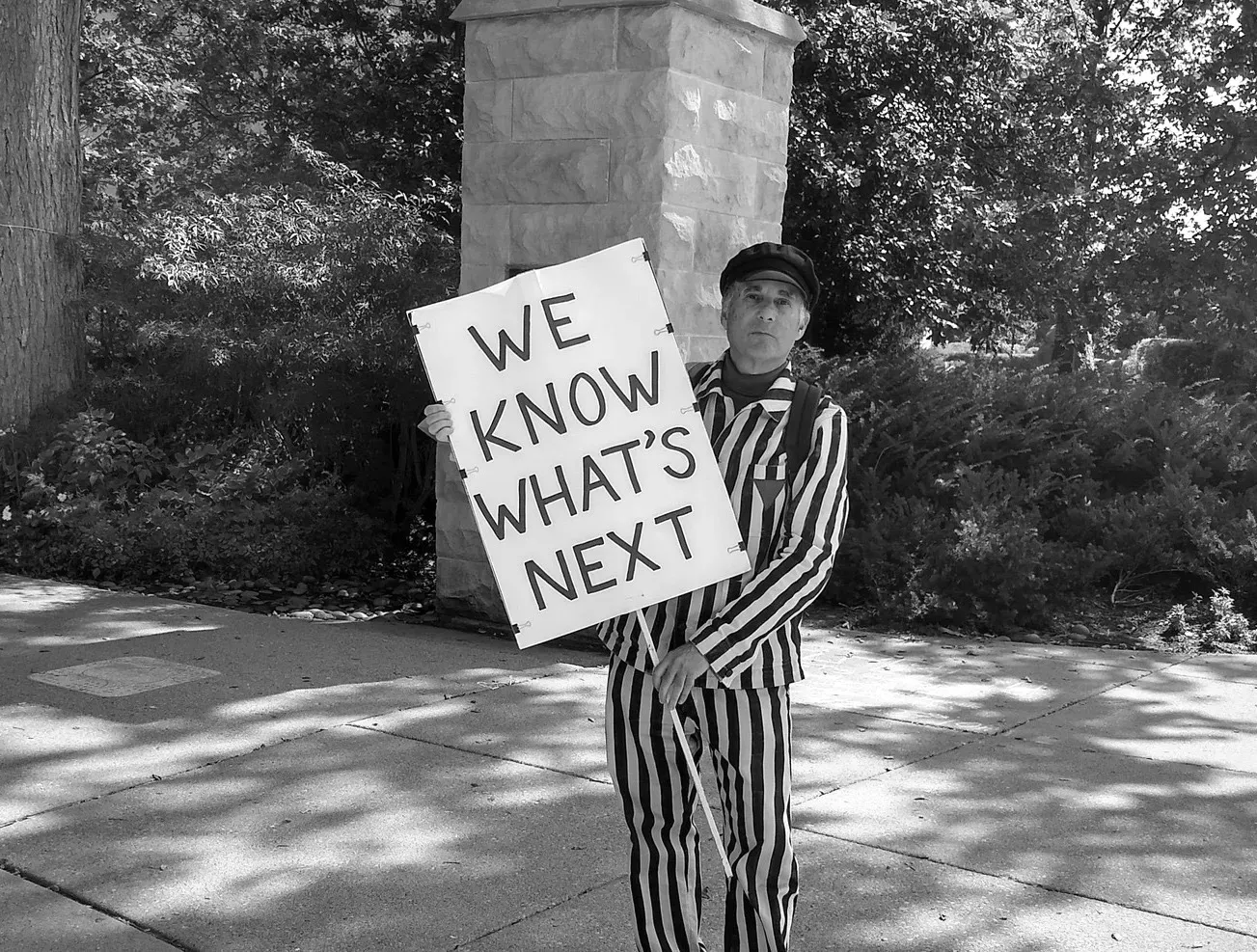
Chicagoan Lee Goodman is a long time community activist on behalf of immigrant rights. He conducts empathetic, in-depth conversations nationwide with people at public sites related to immigration enforcement and imprisonment, including Alligator Alcatraz and the Broadview ICE detention site in Chicago. To inspire conversation, he often wears a copy of the uniform that was forced onto victims in Nazi concentration camps.
These essays can be found on Lee’s Facebook page. Follow him at https://www.facebook.com/lee.goodman.963